
The Kosher Connection – Radiant Mobile Follows Christian MVNO with “The Dome”
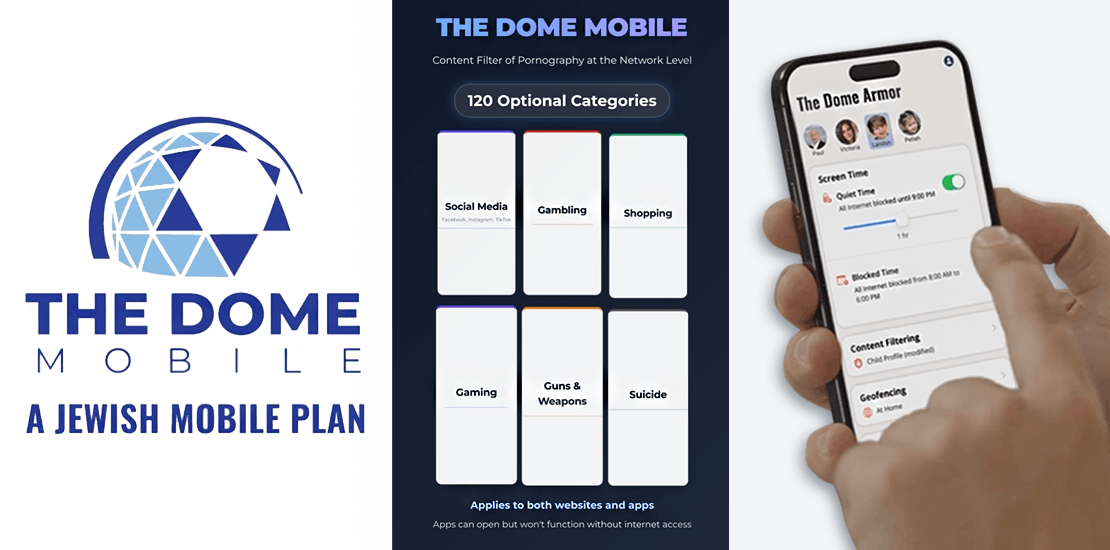
The Dome Mobile: A new Jewish MVNO project featuring carrier-level content filtering and “The Dome Armor” management interface
Following the launch of the “Jesus-centric” mobile virtual network operator (MVNO) Radiant Mobile, founder Paul Fisher is expanding his vision of ideologically filtered telecommunications with his next MVNO project: The Dome.
Designed specifically for the Jewish community, The Dome represents the second pillar in Fisher’s growing portfolio of lifestyle MVNOs. Much like its Christian predecessor, the service aims to provide a kosher digital environment by embedding religious and moral guardrails directly into the network infrastructure.
Radiant Mobile officially launched on April 5, 2026. To mark the occasion, Fisher launched with a 24-hour marathon of Christ-centered content. This sets a precedent for how The Dome might launch, perhaps utilizing a similar 24-hour cycle of Torah study or Jewish cultural programming to onboard new subscribers.
The Dome utilizes the same ecosystem as Radiant Mobile, a partnership with T-Mobile for mobile network coverage, the mobile virtual network enabler (MVNE) CompaxDigital for handling the telecom side, and the Israeli cybersecurity firm Allot for content filtering.
Unlike standard parental control apps that can be bypassed by a factory reset or by deleting an application, The Dome’s restrictions occur at the carrier level.
This means:
Persistent Filtering:
Web requests are intercepted and categorized before they ever reach the device.
Unblockable Bans:
Content deemed sexually explicit, or otherwise incompatible with religious values cannot be toggled off by the user.
Subjective Moderation:
Similar to the Christian version, The Dome will likely filter a wide range of content from pornography and gambling to specific lifestyle topics, based on Fisher and Co’s interpretation of religious safety.
The promotional materials for The Dome emphasize digital safety as a religious obligation, framing the network level block as a protective shield for the Jewish household.
From Supermodels to Super Faith
The project marks a striking career shift for Paul Fisher. Once known as a high-powered modeling agent who launched the careers of Naomi Campbell and Stephanie Seymour, and hosted the TV series “I Can Make You a Supermodel,” Fisher is now applying the same star-maker intensity to the telecom world.
Fisher’s MVNO business model leans heavily on community-centric economics. Just as Radiant Mobile donates a portion of its $30 monthly fee to local churches, The Dome might integrate some kind of support mechanisms for Jewish community organizations.
A key differentiator for Radiant Mobile the Pastor Partnership Program. A portion of the monthly $30 fee is redirected back to the user’s local place of worship. For The Dome, this could translate to a Synagogue Partnership Program. This turns the mobile service into a recurring donation tool, making the Parallel Telecom economy not just a lifestyle choice, but a financial pillar for religious institutions.
The Growth of Parallel Telecom
The emergence of The Dome signals that Radiant Mobile was not a one-off experiment, but the start of a broader trend toward Parallel Telecom.
By moving beyond political alignment (like the MVNOs, Credo Mobile, Patriot Mobile, Sage Wireless and Trump Mobile) into deep religious and moral filtering, Fisher is carving out a market where the utility provider acts as a moral gatekeeper.
An Equal and Opposite MVNO Reaction
The concept of value based telecommunications actually has a long history, pioneered decades ago in Europe’s “Pink Economy.” In 2005, the Danish market saw the launch of Gay Mobile (often referred to as the “HOMOBILE”), which committed 25% of its profits to community trusts.
Similar initiatives, such as Pink Mobile in the Netherlands and PRIDE Wireless in the United States, followed. These forerunners proved that consumers were willing to turn a basic utility into a tool for community advocacy.
The primary distinction lies in the technical architecture. The earlier Pink Economy MVNOs focused on a model of Radical Inclusion, ensuring that identity-related resources was accessible while funneling monthly fees into LGBTQ+ health and civil rights organizations.
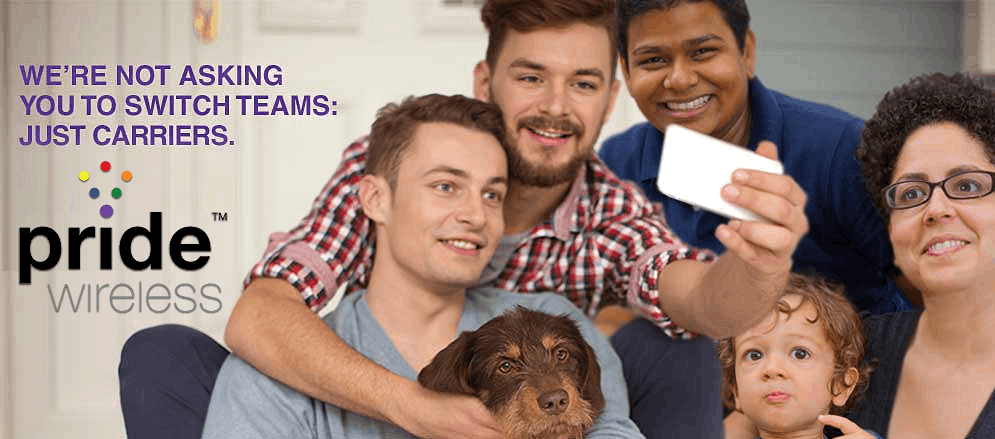
Paul Fisher’s platform utilizes the same tithing mechanic, redirecting a portion of the $30 monthly fee to religious institutions but implements a different technical framework. This new wave of Parallel Telecom uses carrier-level filtering to create a protected digital environment for those who seek such.
The content that the original pioneers sought to prioritize is the exact category that Fisher’s Jesus centric MVNO and The Dome are designed to restrict based on the religious requirements of their target audience.
In the polarized landscape of 2026 and the world of ideological MVNO branding, every action in the Parallel Economy tends to trigger a corresponding reaction. As Fisher builds network-level walls to provide a filtered experience for those who request it, the market may see the arrival of services positioned at the opposite end of the spectrum (no pun intended).
We could see the launch of Satan Mobile, Libertine Wireless, or Hello LGBTQ+, which would likely market themselves on the principle of unfiltered access.
If the monthly phone bill has truly become a badge of identity, the next wave of US MVNOs may be defined, not just by what they filter out, but by what they choose to protect.
This shift positions the mobile icon in the top of your screen as a new frontier for the American market, where the choice of a data plan reflects the specific digital reality a subscriber chooses to inhabit.
What MVNO is Next?
With The Dome nearing launch, Fisher shows no signs of slowing down. The company has at least two more niche MVNOs in development: Foodie Mobile for the culinary community and IN Mobile, taking Paul Fisher back to his roots in the fashion industry.
Being a Danish viking descendant, I’m personally holding out for the ultimate niche. Call me when someone launches a Valhalla MVNO, where cat videos are blocked, but plunder, sword-wielding, and mead-hall content are the only things available.
Skål!


Latest MVNO News
LET’S TALK MVNO
If you have any questions, please fill out the form and a member of our team will get in touch with you. We are always open for talks on how we can add value to your MVNO.