
Enhanced Service Provider MVNO (Medium MVNO)
Quick Summary
A Medium MVNO operates under its own brand using its own SIM cards, and it can secure its own numbering range or mobile network code. While it remains partially dependent on the host operator, this model allows the MVNO to integrate its own value-added services (VAS) to differentiate from competitors and drive sales.
Key model characteristics:
- Commercial Independence: Includes self-owned SIMs, full customer ownership, and the ability to set tariff bundles and packages independently of the MNO’s retail pricing.
- Strategic Focus: Designed to capture market share, generate revenue, or drive an uplift in core business via bundles, often targeting specific niches or segments.
- Operational Scope: Responsible for CRM, support, billing processes (BSS), marketing, sales, and distribution. Some may own their own HLR to control MSISDNs.
- Limitations: Interconnect and IMSI are controlled by the host MNO, and the MVNO cannot negotiate wholesale interconnection agreements with other operators.
For the full breakdown—including detailed business models, cost structures, and operational architecture—read on below.
The Medium MVNO operates under its own brand, and can obtain its own numbering range/mobile network code. Although not completely independent from the host operator, the MVNO can add its own value-added services to leverage sales or differentiate from the competition.
MVNO Type: Medium MVNO
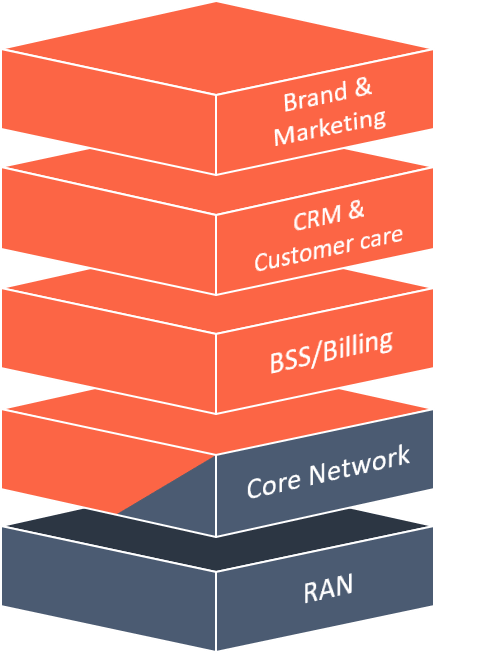
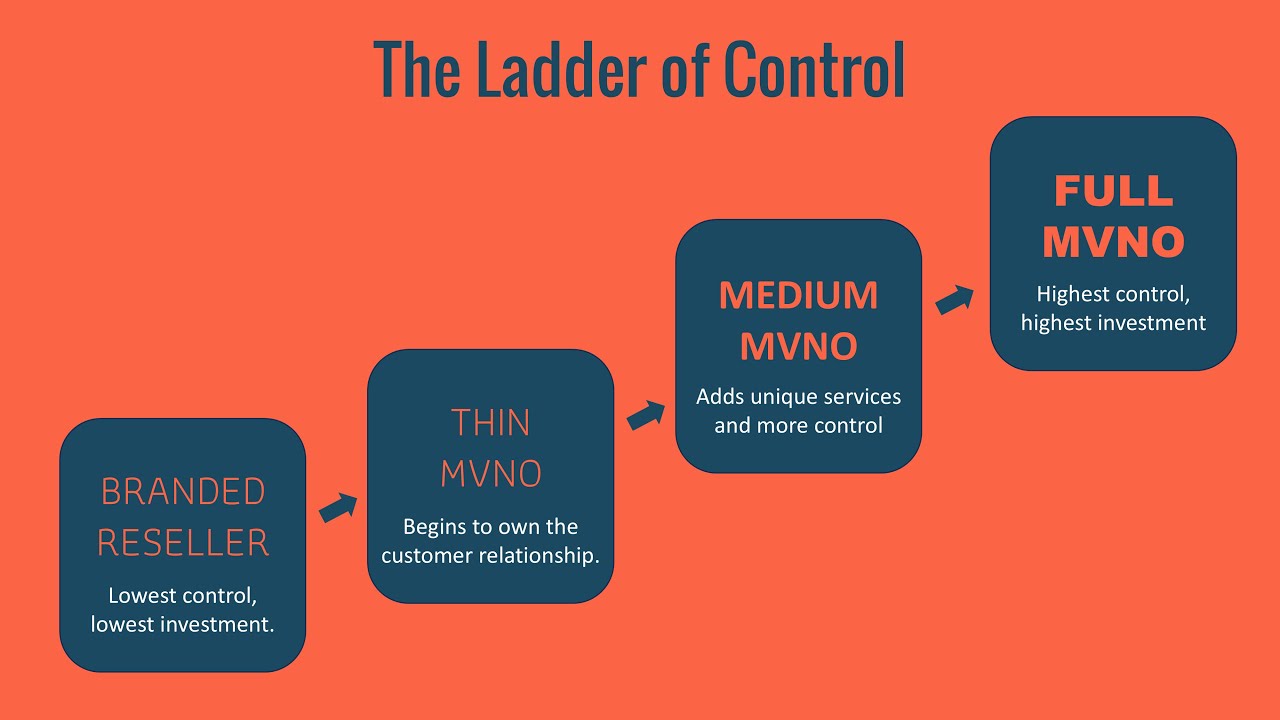
Adds unique services and more control. The Medium MVNO (Enhanced Service Provider) model strikes a balance between flexibility and cost. While they still do not own all the core network elements, they take control of their business operations. This allows them to create more customized offerings than a Thin MVNO.
What they do: They own their Business Support Systems (BSS) and Operational Support Systems (OSS), including billing, rating, and customer care. They still purchase core network and radio access from the host network, or via a Mobile Virtual Network Aggregator (MVNA).
Key characteristic: They have full control over their business operations, allowing them to define their own pricing, bundles, and services.
Example: FNB Connect (South Africa).
Medium MVNO Model - Advantages
- Self-owned SIMs, customer ownership and relationship, as well as the ability to set tariff bundles and packages independently from the retail prices set by the mobile network operator (MNO).
- Use the MVNO to capture a share in the mobile market and generate telecoms revenues—or to drive an uplift in the core business (bundles).
- Focus on addressing a particular niche or segment.
- The MVNO can add its own value-added services (VAS) platform to upsell or differentiate from the competition on apps, data, and content services.
Medium MVNO Model - Disadvantage
- Costs on OPEX and CAPEX are associated with the IT platforms.
- Interconnect and IMSI come from and are controlled by the mobile network operator (MNO).
- The MVNO cannot negotiate traffic wholesale interconnection agreements with other operators.in/destination).
Medium MVNO Model - Operational Model / MVNO Architecture
- The Enhanced Service Provider is responsible for the customer care processes, including the customer relationship management (CRM), support, billing processes and billing platform (BSS), tariffs, bundles and promotion packages, costs of marketing, sales, and distribution, as well as the OPEX and CAPEX associated with the IT platforms.
- Some may own their own home location register (HLR), which allows control of the Mobile Station International Subscriber Directory Number (MSISDN), which is a number used to identify a mobile phone number internationally.national (origin/destination).
Medium MVNO Model - Business Model
- Revenues: from traffic of its own customers
- Costs: Wholesale rates, marketing, sales, distribution, OPEX and CAPEX associated with the IT platforms.
- Wholesale rates may vary with the type of Voice/Data/SMS/MMS, e.g., On-Net or Off-Net, National or International (origin/destination).
See how the Medium MVNO model compares to the Reseller MVNO, Thin MVNO or Full MVNO model in your MVNO Types & Operational Models.
Additional MVNO Type & Operational Models Information
For a visual deep-dive, watch our video on Thin • Medium • Full – MVNO Types and Operational Models.




LET’S TALK MVNO
If you have any questions, please fill out the form and a member of our team will get in touch with you. We are always open for talks on how we can add value to your MVNO.