
Reseller MVNO (Branded Reseller)
Quick Summary
A Reseller MVNO operates under its own or a co-branded identity, leveraging an existing brand, customer base, or distribution network to drive sales. It is the most accessible model to launch, as the host MNO retains control over core network processes and infrastructure.
Key model characteristics:
- Low Barrier to Entry: Minimal startup costs and faster time-to-market since no infrastructure investment is required.
- Operational Scope: Focuses exclusively on marketing, sales, and distribution, while the MNO handles all technical aspects and tariff settings.
- Strategic Limitations: The MNO retains ownership of customers, data, and SIMs. Revenue is typically generated through margin-sharing or commissions on subscriber acquisitions.
- Industry Challenges: Success is difficult without deep telecommunications expertise, as the model offers little control and high competition from established players.
For the full breakdown—including business model specifics, operational limitations, and the strategic implications of this partnership—read on below.
A reseller MVNO operates either under its own brand or co-branded with a Mobile Network Operator (MNO). This type of MVNO typically brings a brand, distribution channels, and/or a large existing customer base to the partnership, which it can leverage for sales.
It is often the easiest MVNO type for a host network operator to accept, as the MNO retains control over most of the core processes.
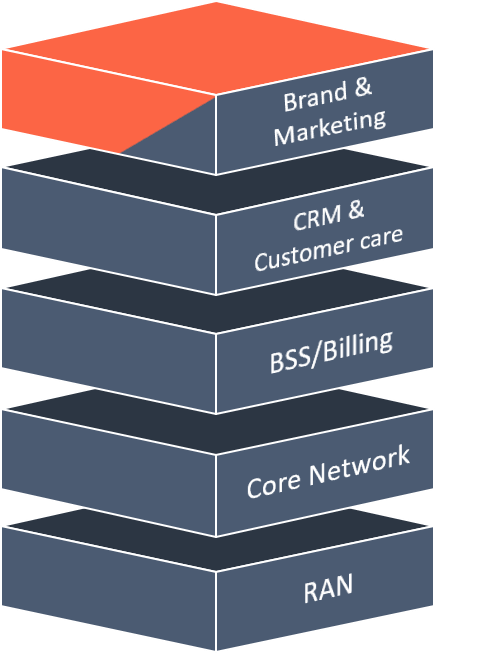
The Reseller MVNO possesses no core network elements and focuses solely on customer contact and relationships.
MVNO Type: Reseller MVNO (Branded Reseller)
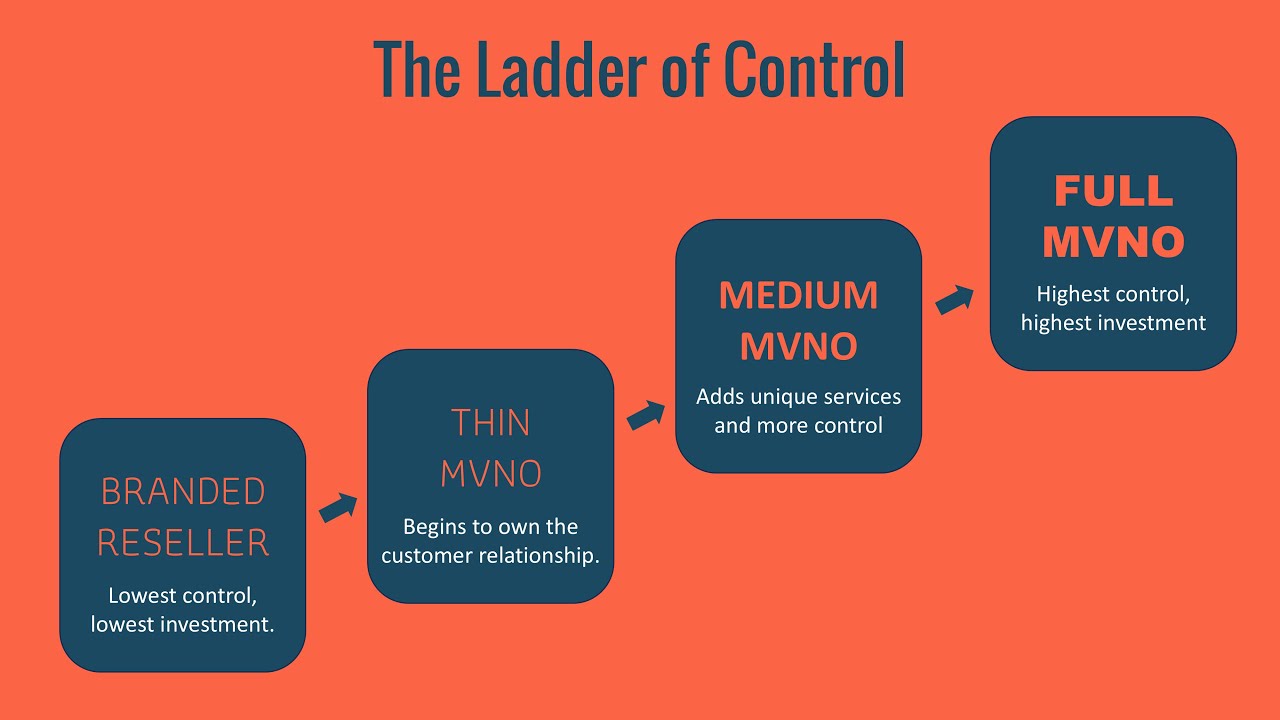
Lowest investment, Lowest control. A Reseller MVNO or Branded Reseller is the most basic and least complex type of MVNO. They focus on sales, marketing, and customer relationships, often leveraging a well-known brand to sell the mobile services. This model requires a low initial investment and has a short time-to-market.
What they do: They acquire pre-defined services and bundles from a host MNO or another provider and resell them under their own brand.
Key characteristic: They have no technical control over the network. They rely entirely on the host provider for billing, customer support, and all network services.
Example: Walmart Family Mobile (U.S.)
Reseller MVNO Model - Advantages
- Low Startup Costs: The time to market and initial investment are low because no significant investment in network infrastructure is needed. The MNO handles most of the technical aspects.
- Core Business Uplift: The MVNO can be used to drive an uplift in the reseller’s primary business.
Reseller MVNO Model - Disadvantages
- Lack of Control: The MNO maintains ownership of customers, user data, post-sale interaction, SIMs, and infrastructure. They are also responsible for setting tariffs. Revenues from incoming traffic belong to the MNO.
- Brand Translation: The existing brand may not translate well to the mobile sector.
- Industry Expertise: A branded reseller may desire more control but often lacks the necessary telecom experience. Gaining market share from established operators is difficult without a solid understanding of the mobile industry and its economics.
Reseller MVNO - Operational Model / Architecture
The reseller MVNO is primarily responsible for the costs of marketing, sales, and distribution.
Reseller MVNO - Business Model
- Revenues: Revenue sharing with the MNO. This typically involves a certain gross margin over the MNO’s existing retail offers. In some cases, the reseller may also receive a commission per active subscriber acquired.
- Costs: Marketing, sales, and distribution.
See how the Reseller MVNO model compares to the Thin MVNO, Medium MVNO or Full MVNO model in your MVNO Types & Operational Models.
Additional Information on MVNO Types & Operational Models
For a visual deep-dive, watch our video on Thin • Medium • Full – MVNO Types and Operational Models.





LET’S TALK MVNO
If you have any questions, please fill out the form and a member of our team will get in touch with you. We are always open for talks on how we can add value to your MVNO.