
Do Fintechs Really Own Their MVNOs?
The rapid growth of fintech and bank MVNOs has pushed financial-services companies far beyond banking, payments, lending, and insurance. Increasingly, mobile connectivity is being used as a strategic extension of the financial-services ecosystem.
The strategy is compelling. Mobile service is one of the few products consumers interact with every day. By combining banking and connectivity under a single brand, fintechs increase engagement, reduce churn, and create deeper customer relationships. The promise is simple: own the SIM, own the customer.
But beneath the marketing narrative lies a question that surprisingly few investors, executives, and fintech founders are asking:
Who actually owns the MVNO business?
For many fintechs who have entered telecommunications today, the answer may not be the fintech itself.
The Carrier-of-Record Problem
The emergence of Carrier-of-Record platforms has lowered the barriers to launching a mobile service. Instead of navigating the complexity of telecommunications regulation, wholesale agreements, lawful intercept obligations, emergency service requirements, and network operations, a fintech can now partner with a provider that handles those functions on its behalf.
The arrangement is attractive. The fintech focuses on branding, customer acquisition, product design, and user experience. The Carrier of Record handles the regulatory and operational machinery required to deliver the service.
(For a full breakdown of what Carrier-of-Record providers typically deliver, how the model compares with MVNA/MVNE and Full MVNO, and the trade-offs involved, see our guide: What Is a Carrier of Record (CoR)?)
On the surface, the result looks like a fintech-operated mobile network. The reality, however, is often very different. Many fintech executives believe they are launching an MVNO business. In reality, some may simply be becoming customers of a telecom platform.
The MVNO Ownership Illusion
This distinction matters because ownership of a customer interface is not the same as ownership of a telecommunications operation.
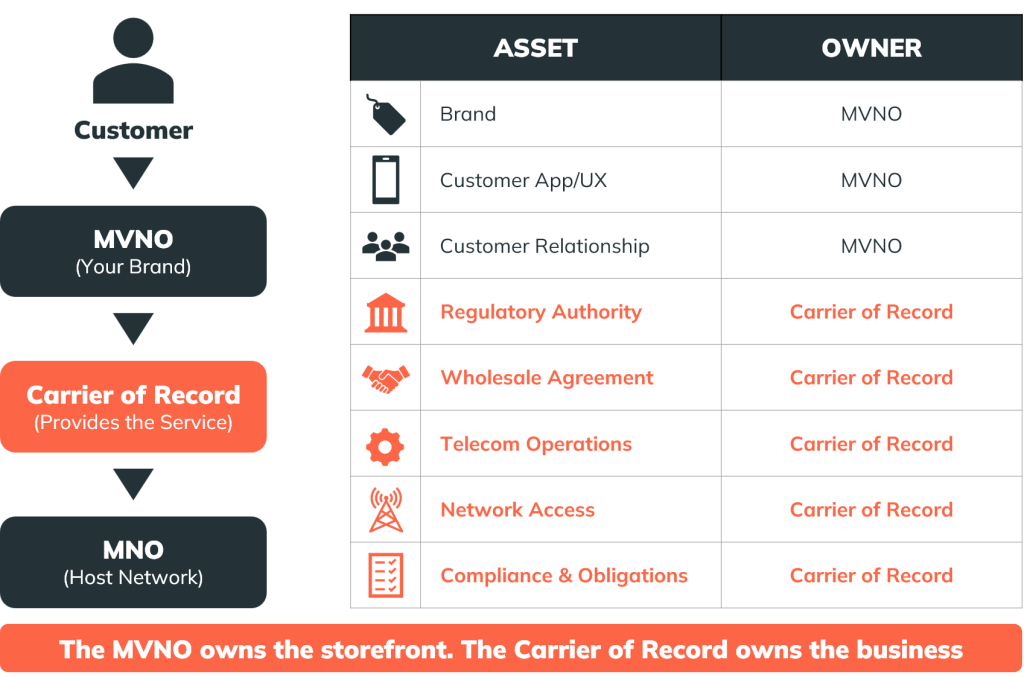
A fintech may own the application. It may own the customer journey. It may own the marketing, billing experience, and brand.
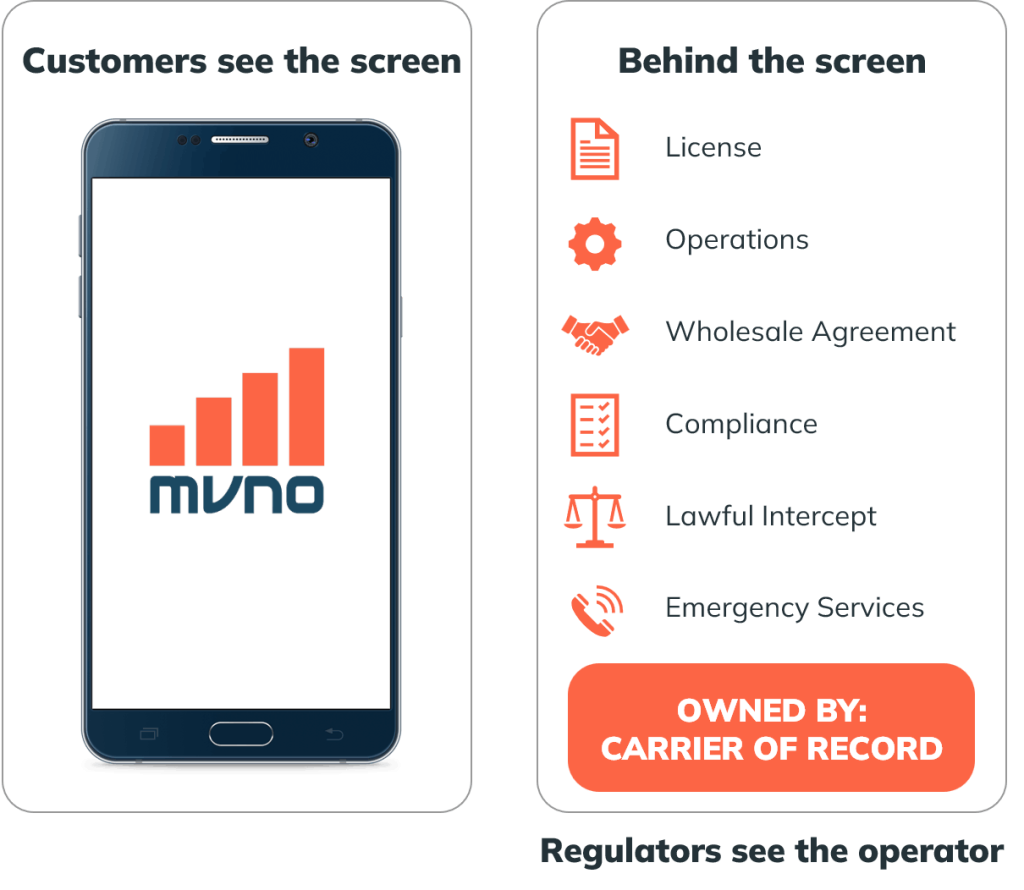
But if another company holds the regulatory authority, manages the wholesale network agreements, fulfills lawful intercept obligations, maintains compliance with telecommunications regulations, and operates the underlying infrastructure, then that company remains the operator.
The fintech owns the storefront. Someone else owns the building. This is where the perception of MVNO ownership begins to break down.
Technology investors often speak about telecommunications as if it were another software layer that can simply be integrated through an API. Telecommunications does not work that way.
Mobile networks remain among the most heavily regulated industries in the world. Every market imposes its own requirements for licensing, emergency services, subscriber registration, lawful intercept, data retention, and consumer protection.
Those obligations do not disappear because a fintech launches an eSIM. They simply move elsewhere. The critical question is therefore not whether a fintech can launch a mobile service. The critical question is who carries the responsibility when things go wrong.
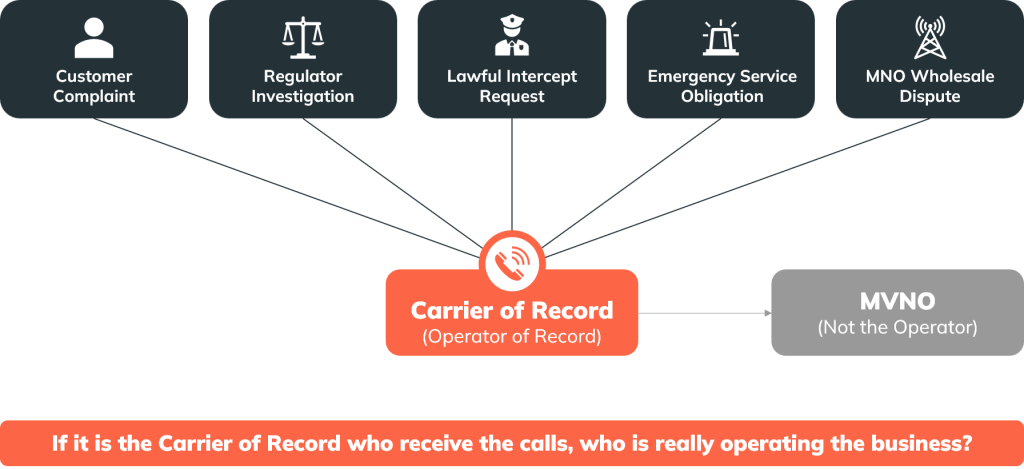
- If a regulator initiates an investigation, who receives the notice?
- If a lawful intercept request is issued, who must comply?
- If a wholesale agreement is terminated, who negotiates the replacement?
- If the service experiences a major outage, who is accountable?
In Carrier-of-Record models, the answer is often not the fintech. That creates a dependency that many executives underestimate.
If a fintech decides to leave its Carrier-of-Record provider, it cannot simply take the regulatory framework with it. Regulatory authorizations are tied to specific legal entities. Compliance programs are tied to specific operators. Operational responsibilities cannot be exported from one company to another with the click of a button.
Should the Carrier of Record experience regulatory intervention, financial distress, technical failure, or business collapse, the fintech may find itself scrambling to migrate customers, establish new regulatory relationships, and rebuild operational capabilities that it never controlled in the first place.
The uncomfortable reality is that if another company holds the legal authority required to operate the service, then the fintech does not fully control the business it believes it owns.
Why This Matters for Fintech MVNOs
Fintechs are not entering mobile services simply to sell connectivity. They are seeking to embed telecommunications directly into their financial products and customer journeys.
A bank may want to provide zero-rated access to its own app so customers can check their balance without burning data, or throttle everything except essential services when a customer falls behind on payments.
A remittance provider may want customers to retain connectivity while travelling internationally. A premium banking service may wish to dynamically prioritize certain subscribers or create differentiated experiences based on customer status.
These capabilities depend on access to network policy controls.
Real-Time Policy Control refers to the ability to independently modify traffic policies, zero-rating, Quality of Service (QoS), charging rules, and subscriber experiences.
In 4G networks this typically means control over the Policy and Charging Rules Function (PCRF).
In 5G networks it means influence over the Policy Control Function (PCF). These systems determine how traffic is treated, how charging is applied, and how subscriber experiences are managed.
None of this happens through a setting a fintech can flip on its own. Every policy, every zero-rating rule, every prioritization tier, every charging exception, has to be written into the PCRF or PCF, which sits inside the network core, not inside the fintech’s app.
If a bank wants to launch a new zero-rated feature next quarter, or adjust which subscribers get priority during a product tier change, someone has to go into that policy engine and make it happen. This is where the distinction between traditional MVNO types and Carrier-of-Record arrangements becomes increasingly important.
Real-Time Control and Product Innovation
| Model | Regulatory Authority | Own MNC / IMSI | Real-Time Policy Control | Ability to Change Host Network |
|---|---|---|---|---|
| Full MVNO | MVNO | Yes | High | High |
| MVNA/MVNE Enabled MVNO | MVNO | Market Dependent | Moderate to High | Moderate |
| Carrier-of-Record Tenant | Carrier-of-Record Provider | No | Restricted | Low |
A fintech operating through a Carrier-of-Record platform may discover that many of these capabilities remain dependent on the platform provider’s roadmap, APIs, commercial priorities, and technical architecture.
The fintech may market itself as a technology company while simultaneously relying on another company to determine what can and cannot be built.
This is why ownership matters.
South Africa’s Different Path
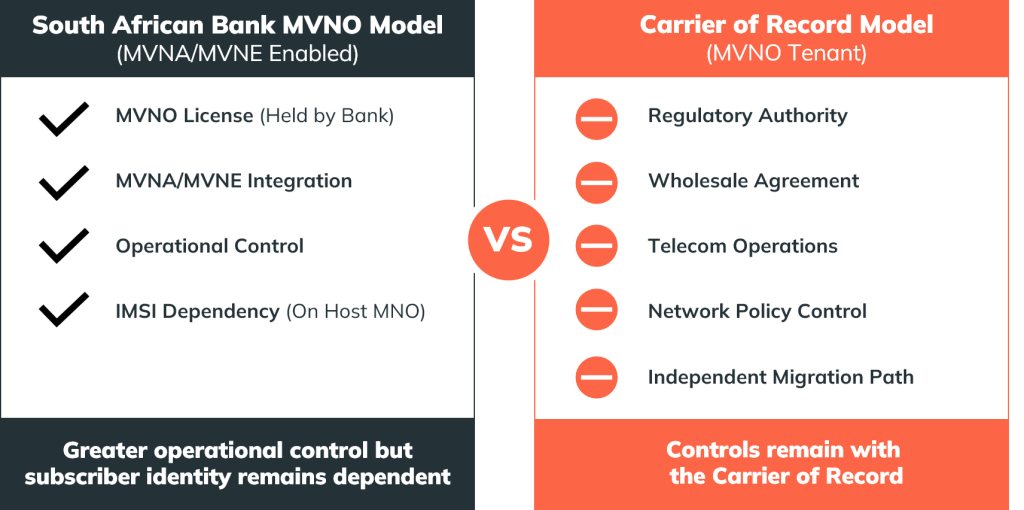
Rather than outsourcing the entire operator function, they have invested in deeper integration with the telecommunications stack and greater operational control.
In many respects, they have followed the telecom playbook. Yet even here another challenge emerges.
The IMSI Dependency Problem
However, South African MVNOs still do not control their own IMSI resources.
An IMSI (International Mobile Subscriber Identity), is the unique identifier that tells the network who a subscriber is. It is effectively the subscriber’s passport within the mobile ecosystem.
When an MVNO does not control its own IMSI resources, subscriber identity remains tied to the host network. The MVNO may control the brand, the customer relationship, and significant portions of the operation, but the subscriber’s network identity ultimately belongs elsewhere.
This creates a different form of dependency.
The challenge is not inherent to the MVNO model itself. In several markets, regulators allow MVNOs to obtain their own numbering resources and IMSI allocations. Where that occurs, subscriber identity becomes portable and independent of the host network.
Markets That Solved the Problem
Kenya provides one example. Equitel, through Finserve Africa, secured its own MNC and IMSI resources, allowing subscriber identity to remain under its control rather than that of the host operator.
Italy provides another. PosteMobile’s Full MVNO model and ownership of its own MNC enabled it to migrate millions of subscribers between host networks without requiring mass SIM replacement.
These examples demonstrate an important principle. Telecommunications independence is not achieved through branding. It is achieved through control.
- Control of the regulatory framework.
- Control of subscriber identity.
- Control of network policies.
- Control of the operational infrastructure required to keep the service running.
The Verdict - Who owns the MVNO business?
This brings us back to the central question. Who owns the MVNO business?
A fintech may own the application, the customer experience, and the brand. It may even own the customer relationship. But ownership of the customer relationship is not the same as ownership of the telecommunications operation.
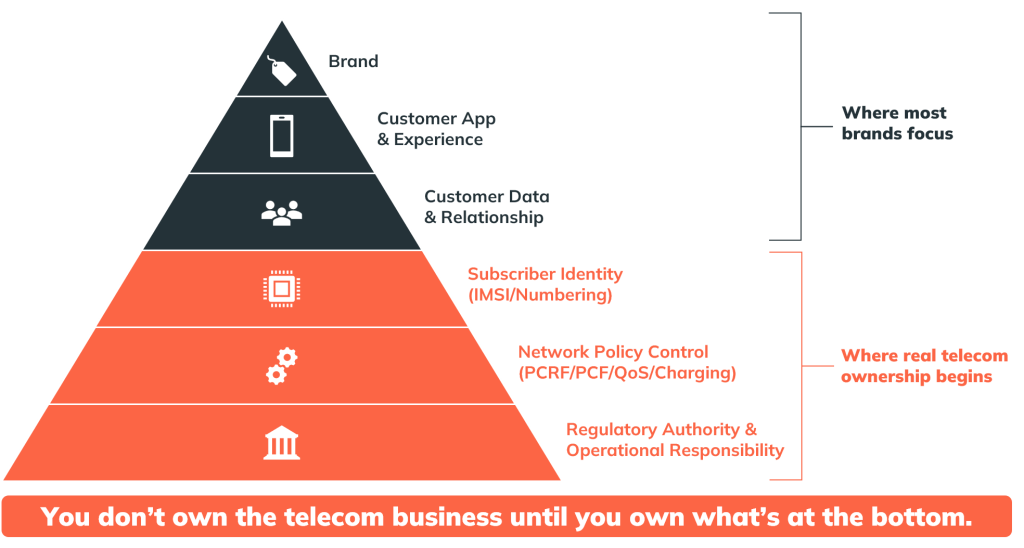
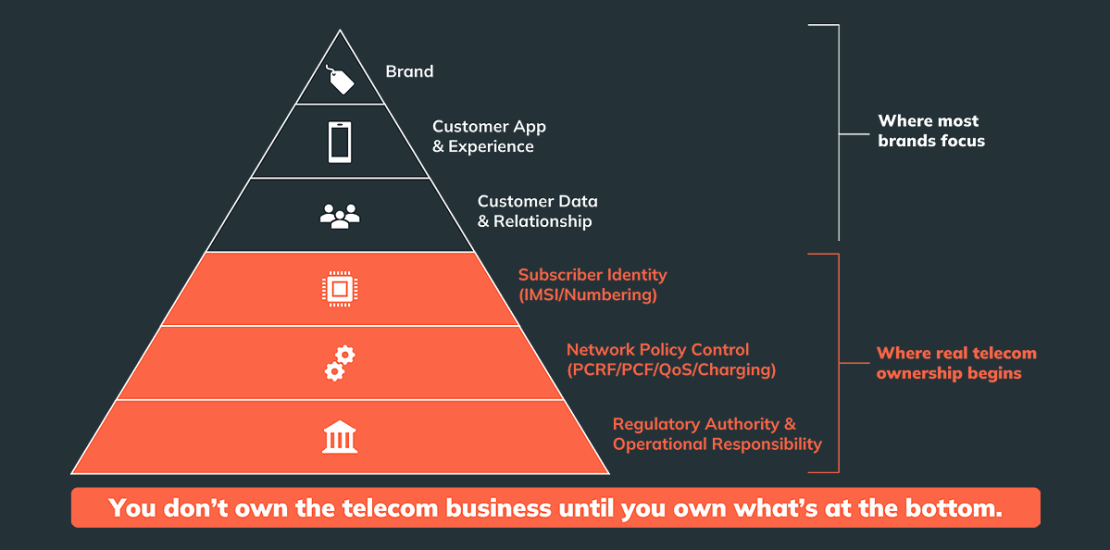
The pyramid makes the split concrete. Brand, app, and customer relationship (the layers most fintechs focus on) sit at the top.
Subscriber identity, network policy control, and regulatory authority (the layers where real telecom ownership begins) sit at the bottom. A fintech can dominate the top three layers and still not own the business.
If another company holds the regulatory standing, legal authority, and operational capability required to provide the service, then the fintech does not fully control the business it believes it owns.
The MVNO industry has spent decades developing models that balance independence, investment, and operational responsibility. Carrier-of-Record platforms introduce a new shortcut to market, but shortcuts often come with trade-offs.
Before launching a mobile service, every fintech should understand exactly which parts of the business it owns, which parts it controls, and which parts ultimately belong to someone else.
The gap doesn’t have to be permanent. Kenya’s Equitel and Italy’s PosteMobile show what closing it actually looks like: securing an MNC, obtaining IMSI allocations, having direct access to network policy control as a Full MVNO rather than routing every product decision through a provider’s or host operator’s roadmap.
Because if the Carrier of Record disappears tomorrow and the mobile service disappears with it, the fintech never truly owned the telecom operation in the first place.
